It is in the DNA of the ECIU to create a strong research and innovation (R&I) ecosystem, and a support system that brings ideas to the market. ‘You need to provide support along the entire pipeline because most researchers did not enter academia to start their own company,’ says John Doyle, Vice President for Research in Dublin City University and chair of the ECIU VP Research Group.
Text: Michaela Nesvarova
Photo: DCU
What makes the R&I ecosystem of the ECIU partner universities unique?
‘We all have similar values. We are all close to our regions and challenges and initiatives within them. At the same time, we do not aim for small technical changes but also focus on the grand challenges faced by Europe. This requires the full breadth of research and innovation.’
What are the main R&I facilities and possibilities offered by the ECIU?
‘I would say the number one is networking. Not a single one of the partner universities can rely solely on its internal and national funding. International funding mechanisms, such as Horizon Europe, have become absolutely crucial in securing our future. And consortia, which are needed for large European projects, require trusted relationships. You do not want to start a project worth millions of euros with people you do not know.
When it comes to facilities, every university has something different to offer. For example, we have built a large R&I campus adjacent to our university (i.e. DCU), which provides easy access to all forms of companies.’
Can you mention examples of successful bottom-up initiatives?
‘For me, the answer lies in the processes. It has always been a challenge to convince academic staff that universities value valorisation efforts. Especially since most academics do not enter the field to start their own company. To persuade them to give it a go, you need processes in place. To this end, at DCU, we have organised simple lunch talks and initiatives for PhDs, provided help with accessing small grants through local agencies, and guided the staff to determine which ideas are potentially marketable. In Ireland, we have the highest number of successful spinout companies per €10 million in research expenditure, and I believe that support for our staff is at the heart of this success. The ECIU University is deeply embedded in the partner universities. It is part of daily reality’
What types of incentives are effective in promoting valorisation?
‘You need to provide support along the entire pipeline. We should expose PhD researchers – and everyone else – to the possibility of starting their own business and have high-quality support activities. For example, at DCU we have developed an in-house AI tool to help us assess marketable ideas and judge their potential for being patented and commercialised. Normally, we would need to spend hours or even days assessing the provided materials, but with this tool, we can give results within minutes. This has encouraged more academics to explore this option.’
Furthermore, at DCU we have not only a spin-out programme, but also a spin-in programme. Entrepreneurs who have an idea, but do not have the right technology yet, can come to work at our university and collaborate with academics to develop the idea further.’
In your opinion, what is ECIU’s recipe for success?
‘I think we have a better network than other European University Alliances. Many alliances origin from collaborations but still needs to be known across the student population and the faculties. The ECIU University is deeply embedded in the partner universities. It is part of daily reality. This is very unique. Moreover, ECIU efforts cover research, education and innovation. Although we have received funding only for education, we do not believe that you can have a European University Alliance that does not focus both on research and education. In fact, we believe that the alliance will collapse if the research aspect is not properly addressed.’
Founded in 1997,
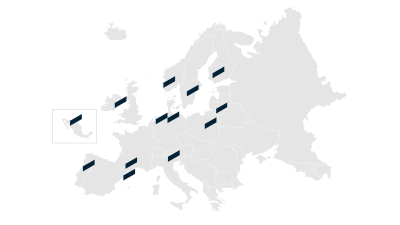
ECIU brings together 13 universities with a collective emphasis on innovation, creativity and societal impact. The ECIU member universities have a long track record in university-industry interaction and collaborating with their regions.
Since 2019,
all members also form ECIU University one of the first European University Alliances. In ECIU University, learners, teachers and researchers cooperate with cities and businesses to solve real-life challenges.
European University Alliances
The European Universities Initiative is a bold EU effort to build strong alliances among higher education institutions across Europe, benefiting students, staff, and society. Funded mainly through Erasmus+, it supports, long-term, strategic, and sustainable cooperation. Its goals include strengthening the international competitiveness of European universities, while fostering European values and identity.