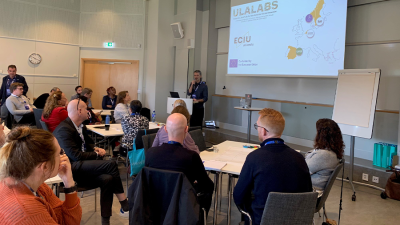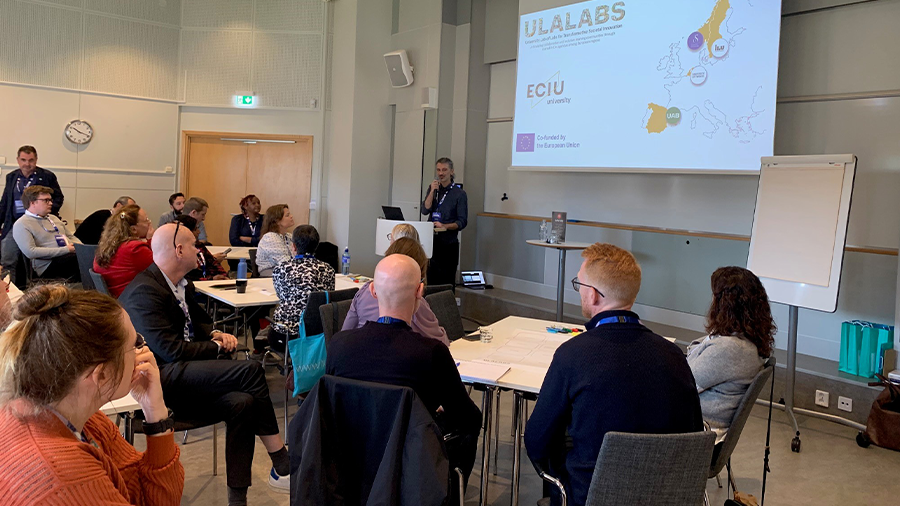



ULALABs, which stands for University Lab of Labs, is meant for transformative societal innovation, creating collaborative spaces where various stakeholders, such as researchers, community members, industry representatives, and local governments come together to address urban challenges. Their focus areas are ‘fighting against climate change, promoting inter-connected higher education systems, and supporting innovation and entrepreneurial skills of students,’ according to the website. The project received Erasmus+ funding of 400 thousand euros, after a seed call from ECIU.
Living labs
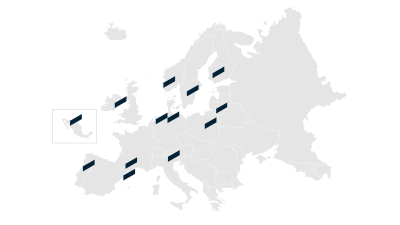
‘The idea of ULALAB is creating a network of living labs and urban experimentation spaces such as testbeds, citylabs, and fablabs, and seeing how they fit together in various stages of ideation, experimentation, and specialisation. So far, four ECIU Universities are currently involved: Barcelona, Stavanger, Linköping, and Twente. This facilitates cross-continental collaboration on solving societal problems,’ says Kourkoutas. ‘As our main goal is bringing various labs together and promote cross-case learning, we do not work on projects directly ourselves.’
Preparing for the pilot phase
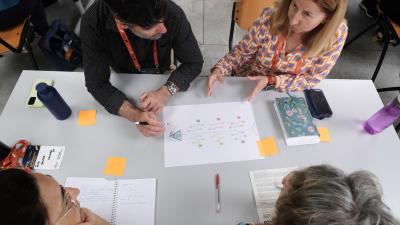
‘We’ve only just kicked things off, after one and a half years of preparing. The first year is all about getting to know each other, mapping what kind of labs everyone was running, seeing how we can reinforce and learn from each other, and then prepare for the pilot phase this year. The idea is to identify an urban challenge and test how emerging technologies and participative concepts can fit into urban design processes.’
Achievements so far
‘We’ve mapped different urban labs and experimentation spaces, connecting them and encouraging collaboration. One key publication is our Emerging Lab of Labs report, and we’re preparing pilot projects with toolkits and micro-credentials to support learning. Working closely with other partners has helped spread the impact, while building learning communities remains central to sharing knowledge and tackling urban challenges.’
He continues: ‘We’re currently working on a methodological framework, for the integration of the Lab of Labs into the ECIU ecosystem structure and function, and we’re hoping we can scale up this framework, and learning to include all ECIU members in the future.’